Indoor comfort guide
Moisture-Aware Cooling for Busy Summer Homes
Connect latent load, ventilation, drainage, airflow, and dehumidification when temperature alone does not explain comfort.
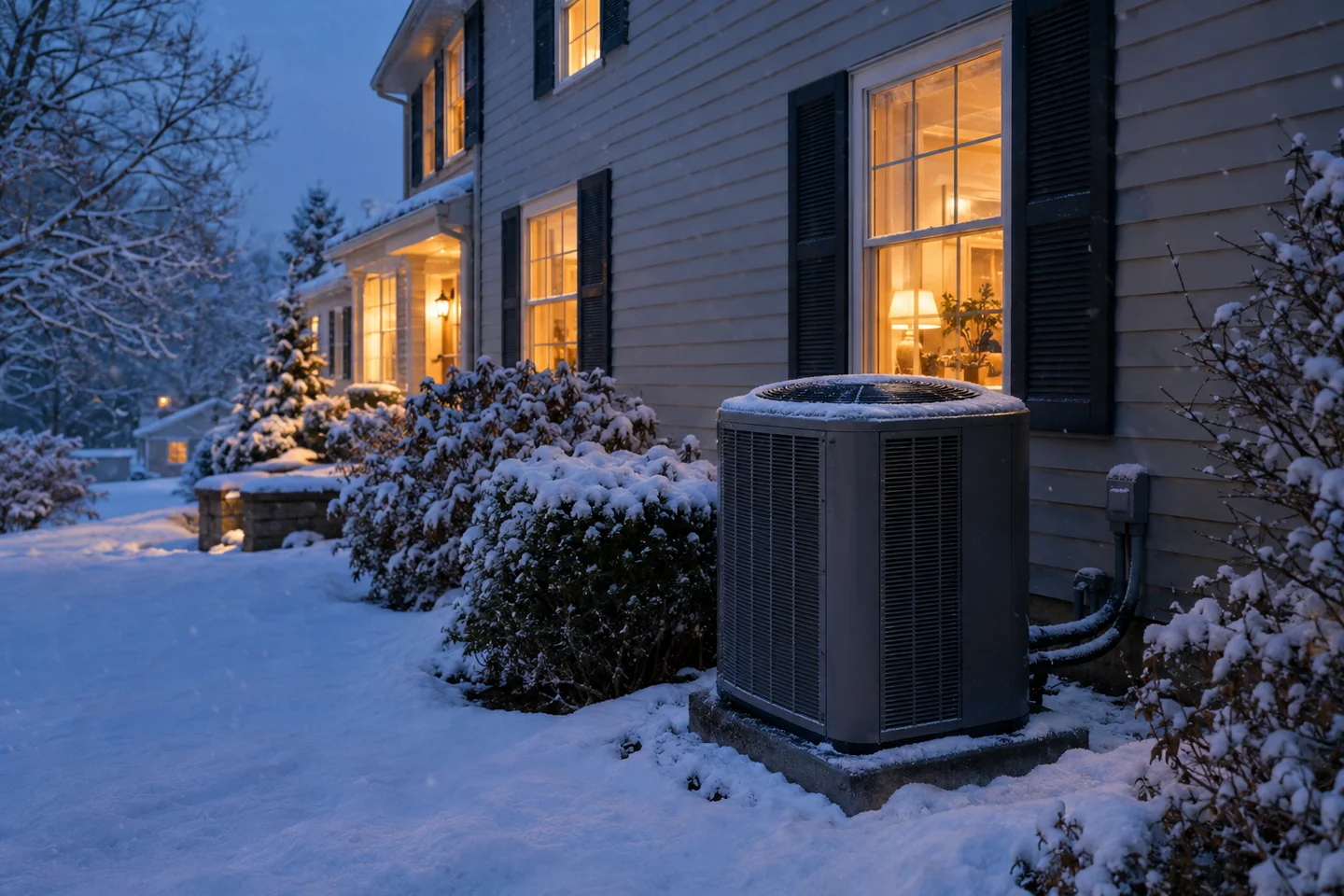
Summer comfort is more than the number on a thermostat. Cooling removes sensible heat and can also condense moisture, but the balance changes with weather, occupancy, ventilation, duct leakage, and run time. This guide gives homeowners across nearby service areas a practical framework for discussing humidity without promising a particular indoor reading.
Start with the moisture question
If a room feels clammy, ask what moisture is entering, where it leaves, and how the cooling system is being asked to respond.
- Trace moisture sources before changing setpoints.
- Review airflow, drainage, and ventilation together.
- Consider dedicated dehumidification when loads demand it.
Sensible and latent loads
Cooling equipment handles room temperature and moisture removal through related but distinct effects.
Moisture has pathways
Infiltration, ventilation, showers, cooking, basements, and wet materials can add indoor water vapor.
Drainage is part of comfort
Condensate needs a reliable route, while controls and run patterns affect how much water is removed.
Temperature does not tell the whole story
Sensible heat raises air temperature; latent load represents energy associated with moisture. An evaporator coil can remove both when humid air contacts a sufficiently cool surface. But a short cycle may lower temperature without running long enough for useful moisture removal. Low airflow, a dirty filter, oversized equipment, or a damp building component can change the balance.
A thermostat cannot diagnose every source. A clammy basement may reflect ground moisture or a drainage issue, while a crowded kitchen adds water vapor during cooking. A closed room can feel different from the hallway because its return path is weak. Ronco Tech starts by separating equipment behavior from building and occupant sources.
Ventilation and infiltration need context
Outdoor air enters through intentional ventilation and unplanned leakage. Summer air often carries moisture, so a ventilation strategy should be considered alongside the cooling load. Exhaust fans, makeup air, duct leakage, attic connections, and crawlspace conditions can all alter indoor moisture. Sealing or changing ventilation without understanding combustion and code requirements is not a homeowner experiment.
A load calculation should distinguish sensible and latent conditions where the design method supports it. The selected equipment, blower setting, coil, and control strategy then need to be compatible. In a tightly occupied home in Upper Southampton, managing outdoor air may be as important as selecting a different cooling capacity.
Drainage and run patterns
Condensate collected at the indoor coil needs a pan and drain that stay clear, sloped, and accessible. Secondary protection may be appropriate where a blocked primary drain could damage finished space. Water marks, algae, overflow switches, or a drain termination near a foundation deserve prompt professional attention. Refrigerant and electrical work belongs with qualified technicians.
Run time and airflow influence moisture removal. A variable-speed or multi-speed system may offer a different operating pattern from a single-stage system, but no product guarantees a particular relative humidity in every house. Controls should be selected and commissioned for the equipment, duct system, and load rather than adjusted randomly after installation.
When standalone dehumidification fits
A dedicated dehumidifier can be useful when latent load remains substantial while sensible cooling demand is modest, such as during mild, damp weather. It may also suit a basement or other zone with a distinct moisture problem. The unit still needs capacity selection, drainage, airflow, service access, and a control strategy. It does not replace correcting bulk water intrusion, failed gutters, or building-envelope defects.
During an assessment, Ronco Tech can document humidity complaints by season, room, weather, and operating mode. Ask what measurements will be taken and which assumptions remain uncertain. A responsible plan may combine equipment maintenance, duct or drain corrections, envelope work by an appropriate contractor, ventilation review, and dedicated dehumidification rather than relying on a single promise.
Frequently asked questions
Why is my house cool but still clammy?
Short cycling, airflow problems, outdoor-air entry, building moisture, or room-specific distribution may limit moisture removal even when temperature falls.
Will lowering the thermostat solve humidity?
It may change run time, but it does not identify the moisture source and can create other comfort issues. Equipment, airflow, drainage, and building conditions should be assessed.
Is a dehumidifier always better than air conditioning?
No. A dedicated unit can complement cooling when latent load is high, but it should be selected for the space and does not correct bulk-water or ventilation problems.
Can a clogged condensate drain affect comfort?
It can interrupt cooling or create water damage, depending on the safety controls. Drain condition should be inspected and corrected by a qualified professional.