COMFORT CONTROL GUIDE
Single-Stage or Two-Stage Cooling? Match Operation to the Load
Compare on/off and two-level compressor operation, with attention to design load, controls, duct airflow, and humidity decisions.
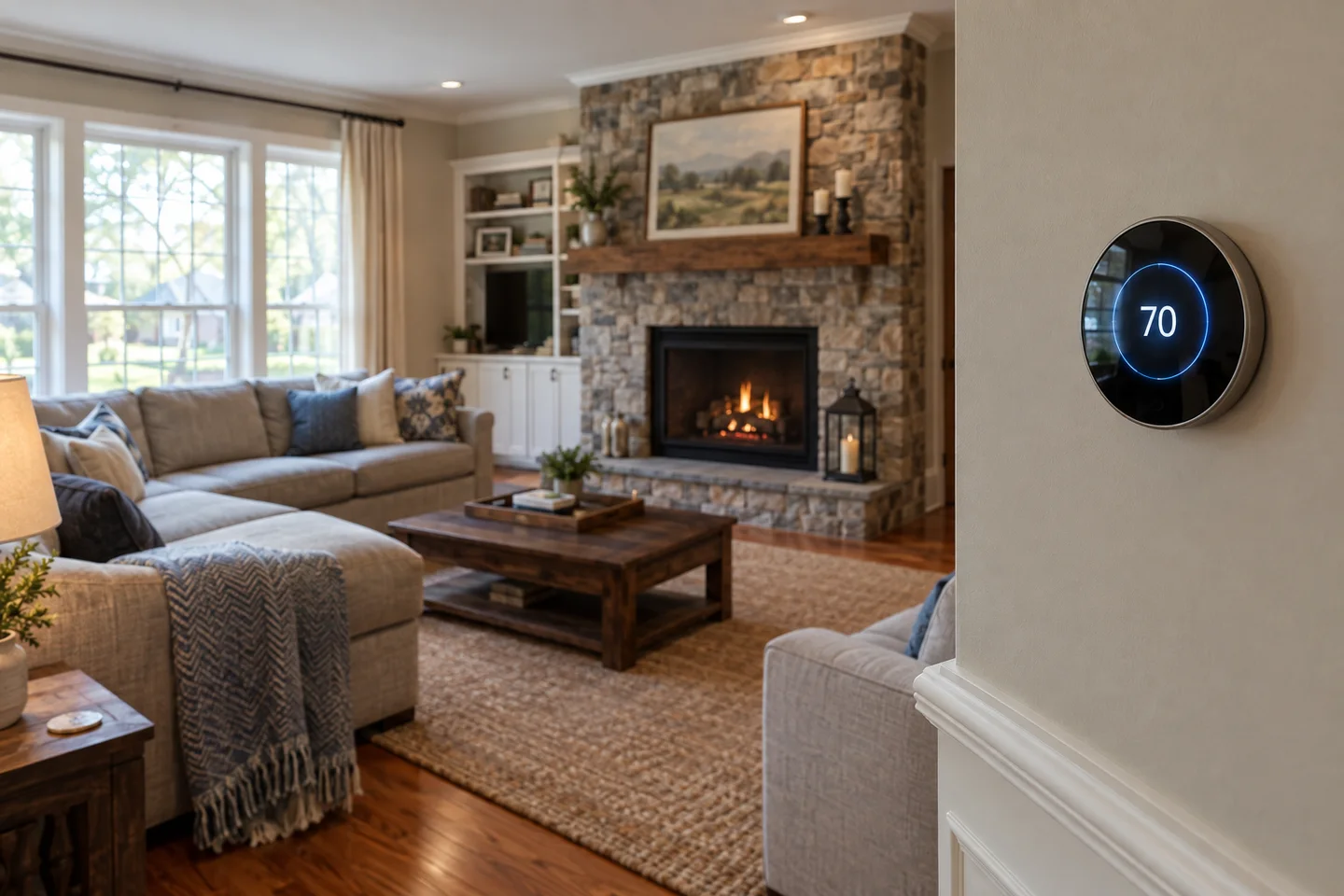
The difference between single-stage and two-stage air conditioning is compressor staging, not simply the number of fan speeds. That distinction matters when a home needs longer lower-output cycles, a strong peak-load response, or a control strategy that works with its duct system. Ronco Tech helps homeowners across Bucks, Montgomery, and Philadelphia communities evaluate the building before treating a label as a comfort guarantee.
Cooling and heating can share equipment
One side says full-on when called; the other says a gentler first step may fit the afternoon. A site visit helps you read both sides honestly.
- Separate compressor staging from blower settings
- Review load, ducts, controls, and indoor moisture
- Choose operation that fits the occupied rooms
Single-stage means one cooling output
The compressor runs at its available capacity when the thermostat calls and stops when the call ends.
Two-stage adds a second level
The system can begin at a lower compressor stage and call for higher output when demand requires it.
Design still comes first
Staging cannot correct an oversized selection, weak distribution, poor envelope, or incompatible controls by itself.
What the stages control
A single-stage compressor has one operating capacity. The thermostat starts a cooling cycle, the compressor runs at that level, and the call ends when the control is satisfied. This arrangement is straightforward, but each cycle’s output is not adjusted to the changing heat load. Blower operation may have its own settings, yet that does not turn the compressor into a two-stage unit.
A two-stage compressor has a lower and higher operating stage. The control can use the lower stage for ordinary demand and bring in the higher stage for a hotter afternoon or faster recovery. The actual sequence depends on the equipment, thermostat, wiring, indoor coil, and installer setup, so the stage count on a brochure should be connected to the complete matched system.
Load, sizing, and cycle behavior
Cooling demand changes with outdoor temperature, sun, occupancy, cooking, infiltration, and the home’s construction. A design-load assessment gives a better basis for equipment selection than copying the capacity of the old unit. A two-stage option can provide another operating point, but it cannot make an incorrectly sized system correctly sized.
Cycle length also reflects thermostat location, duct delivery, insulation, and control settings. Longer operation may help the system exchange more air over time, but results vary by home and setup. Discuss the rooms that feel warm, when they feel warm, and whether the concern is capacity, airflow, humidity, or control behavior before choosing stages.
Humidity and the indoor coil
Moisture removal occurs when humid air crosses a sufficiently cool indoor coil, with condensate leaving through the drain. Operating at a lower compressor stage can change coil conditions and cycle timing, but humidity performance depends on indoor conditions, airflow, coil selection, drain design, and controls. Two-stage equipment is not a universal dehumidifier.
A technician should verify that the indoor coil and air handler or furnace are matched to the outdoor equipment. Blower speed, filter condition, duct leakage, and return-air temperature all affect the coil. If the home has persistent moisture, mention it during the assessment rather than assuming stage two alone solves the issue.
Controls and practical selection
Two-stage operation needs controls capable of requesting the available stages, with appropriate low-voltage wiring and configuration. Some thermostats use time delays or indoor measurements; others use separate calls. The chosen sequence should be documented so homeowners know what the display and equipment are intended to do.
For a home in Upper Southampton or Holland, the best choice may prioritize simplicity, distribution work, or a control upgrade rather than the most elaborate staging. Ronco Tech can compare a properly matched single-stage system with a two-stage design, explain tradeoffs, and identify installation work. Electrical and refrigerant tasks belong to qualified professionals, not DIY work.
Frequently asked questions
Is two-stage the same as a variable-speed air conditioner?
No. Two-stage equipment offers two compressor output levels. Variable-speed equipment can adjust across a broader modulation range, subject to its controls and matched components.
Does a two-stage system always run quietly?
No. Sound depends on equipment, airflow, mounting, duct design, and operating stage. A lower stage may sound different, but no universal quietness claim is appropriate.
Can staging fix an oversized air conditioner?
It cannot substitute for a proper load assessment and compatible selection. Oversizing, ducts, controls, and envelope issues still need individual attention.
Will two stages remove all indoor humidity?
No. Moisture removal depends on coil conditions, airflow, runtime, drainage, and the home. Persistent humidity should receive a dedicated evaluation.