Winter performance guide
Cold-Climate Heat Pump Design for Winter Load Decisions
Learn how winter design temperature, capacity, defrost, COP, and backup planning shape a cold-climate heat-pump project.
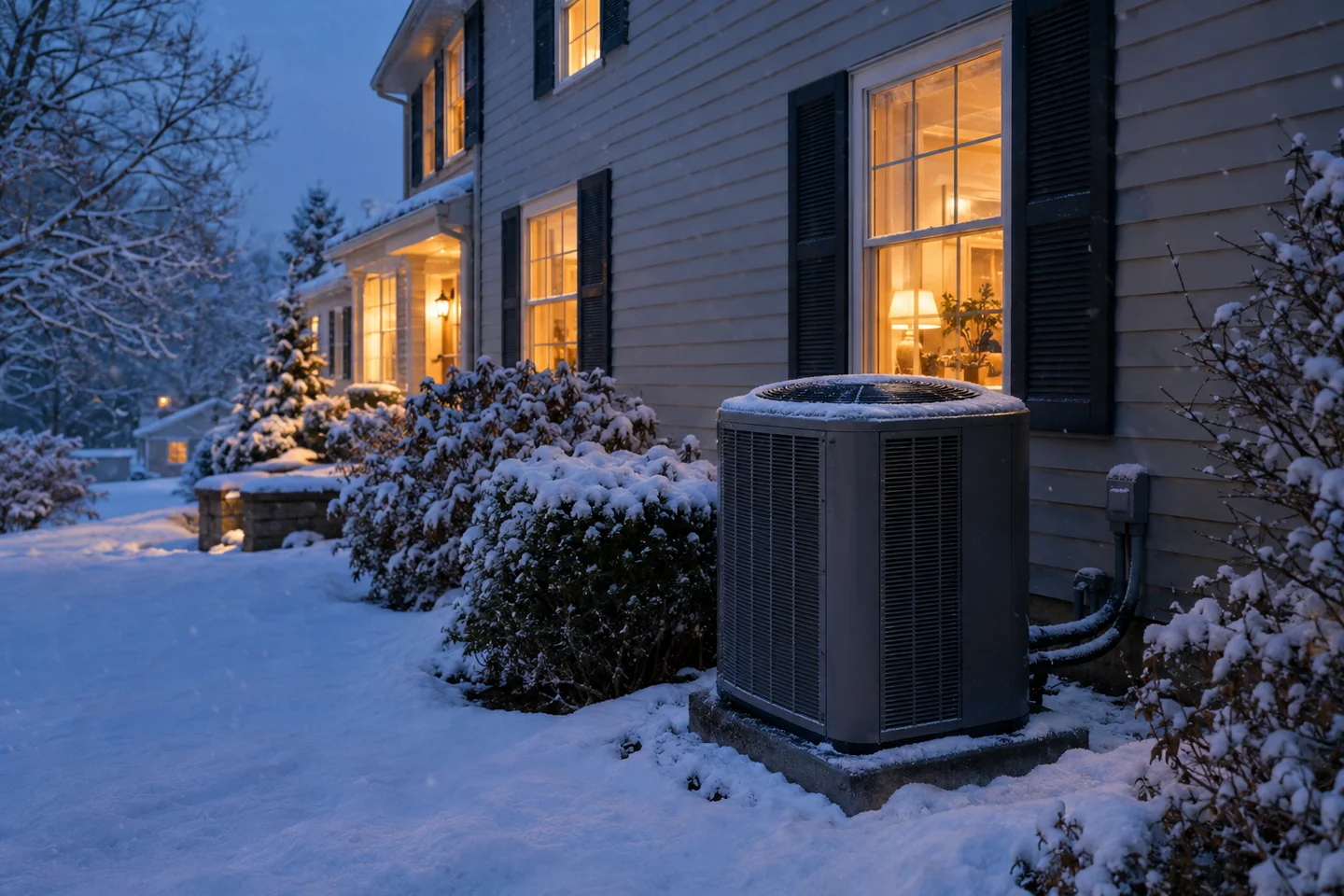
Cold-climate labeling is a starting point for design, not a promise that every unit supplies the same capacity at every outdoor temperature. In the Philadelphia region, a thoughtful plan considers the home's winter design load, equipment capacity curves, defrost cycles, distribution, and backup sequence. Ronco Tech helps homeowners across Bucks, Montgomery, and Philadelphia—including Holland and Richboro—turn those questions into a site-specific plan.
Build a winter performance plan
A useful plan includes the weather conditions and small details that keep a seasonal decision grounded.
- Compare design load with documented low-temperature capacity.
- Identify what happens during defrost and unusual cold.
- Choose backup logic that matches the building and household.
Design temperature matters
A heating load calculated at the local winter design condition gives context that a marketing label alone cannot provide.
Capacity is a curve
Output and efficiency change with outdoor temperature, airflow, indoor conditions, and defrost operation.
Backup is deliberate
Auxiliary heat, retained equipment, and load management should be discussed before installation rather than discovered mid-winter.
Start with the winter design load
Heating design begins with the building: floor area, orientation, windows, insulation, infiltration, ceiling heights, additions, and room distribution. A winter design temperature is a planning condition used for sizing; it is not a forecast and does not describe every hour. The resulting load helps compare a heat pump's available output with what the home needs at that condition.
That comparison should be made using manufacturer performance data for the proposed match, indoor airflow, and controls. A unit may have adequate seasonal performance yet require supplemental heat at a particular outdoor condition. Ronco Tech can explain the assumptions and how envelope improvements and distribution affect the equipment conversation.
Read COP and capacity together
COP describes the relationship between heat delivered and electrical energy used under a stated test condition. It is not one permanent number for a whole winter. Outdoor temperature, indoor setpoint, coil cleanliness, airflow, defrost, and auxiliary heat all influence real operation. Capacity is equally important: efficiency alone does not tell whether the system can meet the load.
A responsible proposal identifies the conditions behind its performance references and separates heat-pump output from resistance backup. Cold-climate equipment is available in different cabinet shapes and operating approaches, including multistage and variable-capacity designs. Catalog naming is useful for comparison, but a matched selection and installation determine whether a particular home is appropriate.
Defrost is part of normal operation
When outdoor coils accumulate frost in suitable weather, the system can temporarily reverse operation to melt it. During defrost, controls manage refrigerant flow and may use auxiliary heat or another strategy to maintain indoor comfort. A homeowner may notice a change in sound or outdoor vapor; the correct response depends on the equipment and conditions, not on guessing from appearance.
The design should include drainage, clearances, coil access, weather exposure, and a control sequence that accounts for defrost. A WeatherGuard-equipped model name does not eliminate the need for proper placement. Technicians should explain what occupants will observe, when service is appropriate, and how the indoor system responds while the outdoor coil is being cleared.
Choose backup without assumptions
Backup can be electric resistance in an air handler, a retained furnace in a dual-fuel arrangement, or another site-specific strategy. Electric auxiliary heat can draw substantial instantaneous power, so panel capacity, feeder sizing, staging, and thermostat settings deserve attention. Retaining combustion equipment brings its own maintenance, venting, fuel, and control considerations.
No cold-climate label means every house is guaranteed to avoid backup at a stated temperature. Ask for the balance point or switchover logic, expected backup operation, emergency mode, and service plan. A careful discussion is more useful than a blanket claim, especially for older homes, partially renovated envelopes, and properties where a winter outage or constrained electrical service changes priorities.
Frequently asked questions
Does cold-climate mean no backup is needed?
No. It indicates a design intended for colder operation, but the required capacity, building load, controls, and backup plan remain site-specific.
Why does a heat pump defrost?
Moisture can freeze on an outdoor coil in certain conditions. A controlled defrost cycle melts that frost so heat transfer can continue.
Is COP a yearly guarantee?
No. COP is measured under stated conditions and changes with temperature, airflow, controls, defrost, and supplemental heat.
Can insulation change the equipment choice?
Yes. Air sealing or insulation can reduce the calculated load and alter capacity, airflow, and backup requirements, so renovation timing should be part of design.