Electric Water Heaters: Resistance and Heat Pump Choices
An electric water-heater decision is not simply a choice of tank size. Conventional resistance models make heat inside the tank, while hybrid heat pump water heaters move heat from the surrounding air into the water. That difference affects recovery, efficiency, room conditions, clearances, noise, condensate, electrical work, and the way the household uses hot water. A professional assessment should connect those details to the home rather than treating every electric model as interchangeable.
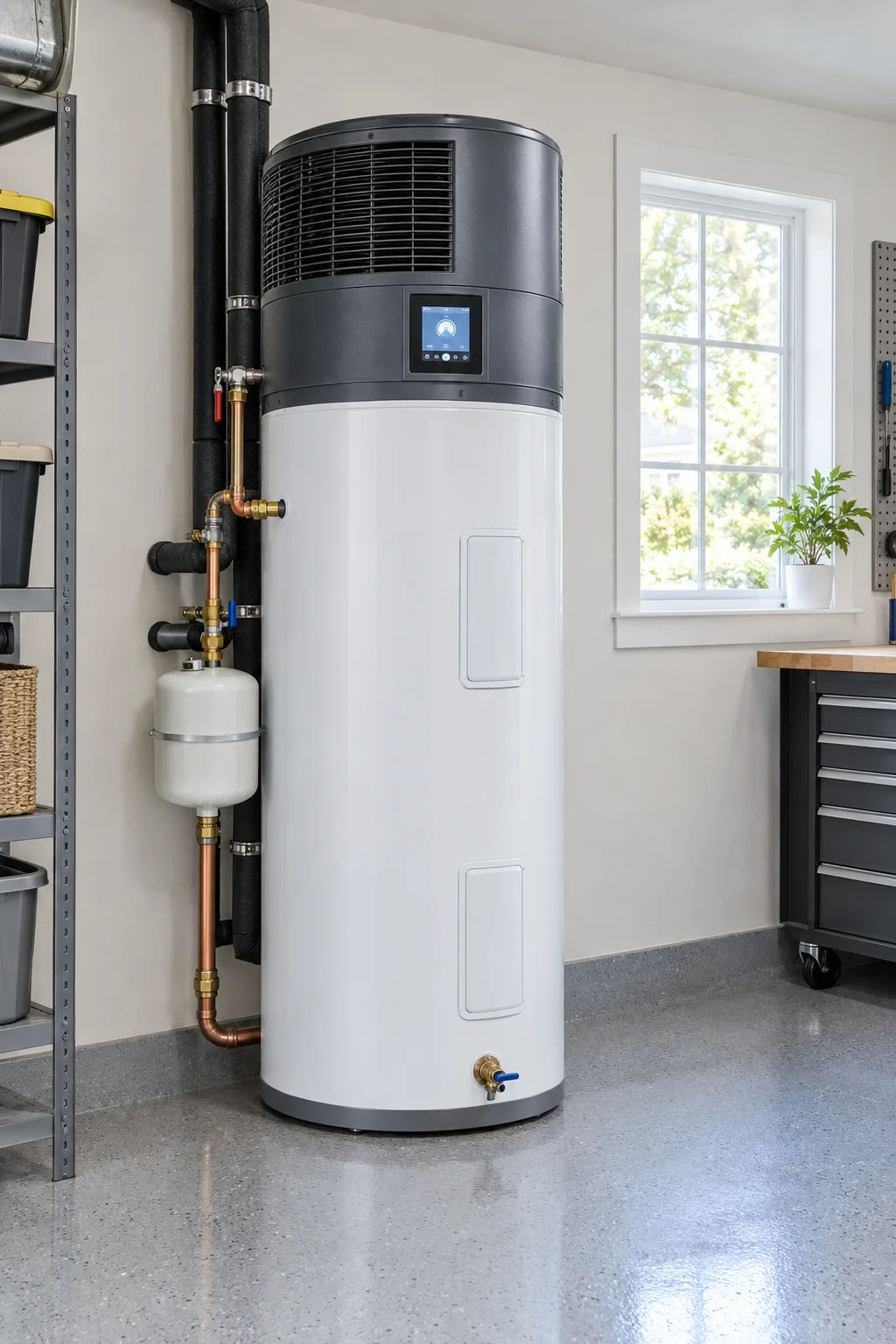
Two electric technologies
Resistance elements create heat directly; a heat pump water heater transfers heat and normally includes resistance backup.
Installation conditions matter
Available air volume, drain routing, sound location, electrical capacity, and service clearances can shape the choice.
Demand comes first
First-hour rating and the household’s peak sequence are more useful than tank gallons alone.
Resistance heat and heat-pump operation are different
A standard electric tank uses one or more immersed resistance elements. The controls normally stage the elements rather than energizing every element at once. The technology is familiar, compact, and independent of combustion venting, but electrical energy is converted directly to heat. A hybrid heat pump water heater uses a compressor and fan to collect heat from room air. Its resistance elements can assist during high demand or in selected operating modes.
The word “hybrid” describes water-heating modes; it does not mean a space-heating heat pump. Mode names and behavior vary by manufacturer. Efficiency-focused, hybrid, electric-only, vacation, or high-demand modes may prioritize recovery differently. Owners should receive the model instructions and understand the selected mode instead of assuming all machines respond alike.
Room, condensate, and sound planning
A heat pump model needs suitable surrounding air and manufacturer-required clearances. It releases cooler, drier air while operating, so a cramped closet can require a model-approved ducting or louver strategy. The fan and compressor make sound that a resistance tank does not. Placement near a bedroom or quiet work area deserves discussion before purchase.
Moisture removed from the air becomes condensate. It needs a reliable, code-compliant disposal route and may require a pump where gravity drainage is unavailable. The installer should also plan pan and drain protection where appropriate, access for the air filter, anode or other service items, piping, shutoffs, and future removal. These details are part of the installation—not accessories to improvise later.
Compare useful delivery, not just the tank label
Nominal tanks such as 30, 40, 50, 65, or 80 gallons are illustrative comparison points, not guarantees for a particular headcount. The first-hour rating estimates how much hot water a fully heated unit can supply during a high-use first hour, combining stored water and recovery. Compare that rating with the home’s real peak: for example, overlapping showers, laundry, and dishwasher use.
Larger storage can add reserve, while faster recovery can restore hot water sooner. Incoming-water temperature, setpoint, fixture flow, distribution losses, and usage timing all influence results. Raising the temperature is not a safe substitute for proper capacity; hotter storage increases scald risk and may require a professionally designed mixing approach.
Electrical capacity and efficiency comparisons
The existing circuit, breaker, conductor, disconnect, and panel capacity must match the new model and local requirements. A replacement can have different electrical specifications even when tank dimensions look similar. Licensed work is appropriate for circuit changes. Homeowners should not open energized equipment or attempt element, control, or wiring repairs.
Uniform Energy Factor, or UEF, is useful when models are compared within the applicable draw-pattern bin. It is not a universal prediction of a family’s fuel bill, and a gas and electric UEF should not be treated as a direct operating-cost contest without considering fuel prices and test categories. Ask for the exact model’s rating, expected mode, and installation assumptions.
Service and ownership questions
Maintenance follows the manufacturer’s instructions and local water conditions. A hybrid unit can add an air filter and condensate system to the familiar tank, valve, and corrosion-protection checks. Rust-colored water, leakage, repeated resets, unusual sounds, or loss of hot water warrants diagnosis rather than repeated do-it-yourself resetting.
Never cap, plug, or test-repair a temperature-and-pressure relief valve, and do not treat active leakage as routine. Warranty documents should be read by exact model: tank, parts, and labor coverage are separate and do not share a universal term. Registration, approved installation, maintenance, and excluded costs may affect coverage.
Frequently asked questions
Is a hybrid heat pump water heater the same as a home heat pump?
No. It heats domestic water by moving heat from surrounding air into its tank. It is not the heat pump that heats and cools the living space.
Will a heat pump water heater work in any closet?
Not automatically. Air volume, clearances, sound, filter access, cooler discharge air, condensate routing, and any approved ducting must be checked against the model instructions.
Does a 50-gallon tank serve a fixed number of people?
No. Gallons are only a starting comparison. First-hour rating and the household’s actual peak sequence are better sizing evidence.
Can I reuse the existing electric circuit?
Only if its breaker, wiring, disconnect, and available capacity satisfy the selected model and code requirements. A qualified professional should verify that before installation.
Should I increase temperature when hot water runs out?
No. That can increase scald risk and does not correct a poor demand or recovery match. Have capacity, controls, and operation evaluated instead.